
“Follow nature. It seems to know what to do.”
~Arnold Mindell

Processwork did not invent the idea of following the process. It inherited it from one of the oldest continuous wisdom traditions on earth and from the earth-based knowing of Indigenous peoples world-wide who have always understood nature as the primary teacher of how to live.
Taoism and earth-based traditions are woven into the foundations of Processwork, shaping not only its philosophy but its methods, its metaskills and the quality of attention it asks practitioners to develop.
“Processwork training is an updated practice of Taoism. It draws on modern physics, indigenous wisdom and shamanism to give you the skills and metaskills to facilitate the flow of nature and navigate its conflicts.”
Arnold Mindell
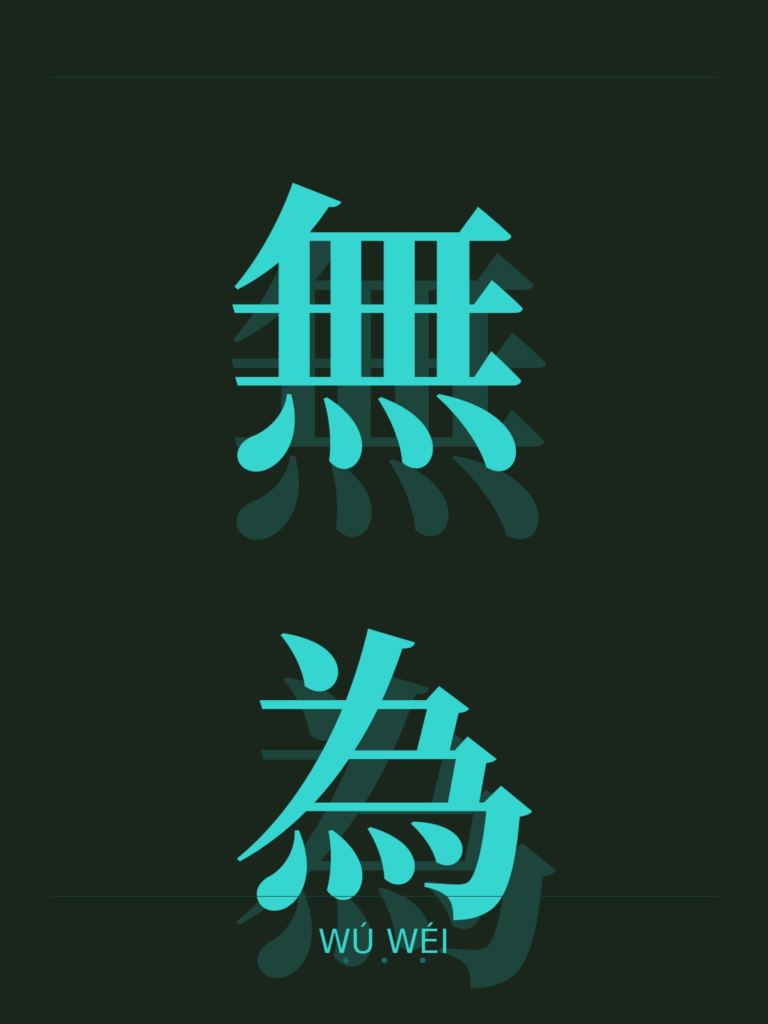
Usually translated as non-action, wu-wei is better understood as action so aligned with the natural movement of a situation that no force is required. The Taoist sage does not push the river. They read it, enter it at the right moment and move with its current. Like water wearing down stone, or a skilled martial artist who works with the energy arising, they move with nature, not against it.
Rather than arriving with an agenda, a technique to apply, an outcome to achieve, the process-oriented practitioner learns to wait, watch and follow what is actually moving. Not their idea of where the process should go, but the process itself. Arnold Mindell was honest about how hard this is: “Go with the flow is a great idea… but people have trouble doing that because a lot of the flow is unconscious or goes against what we consciously want to do.”
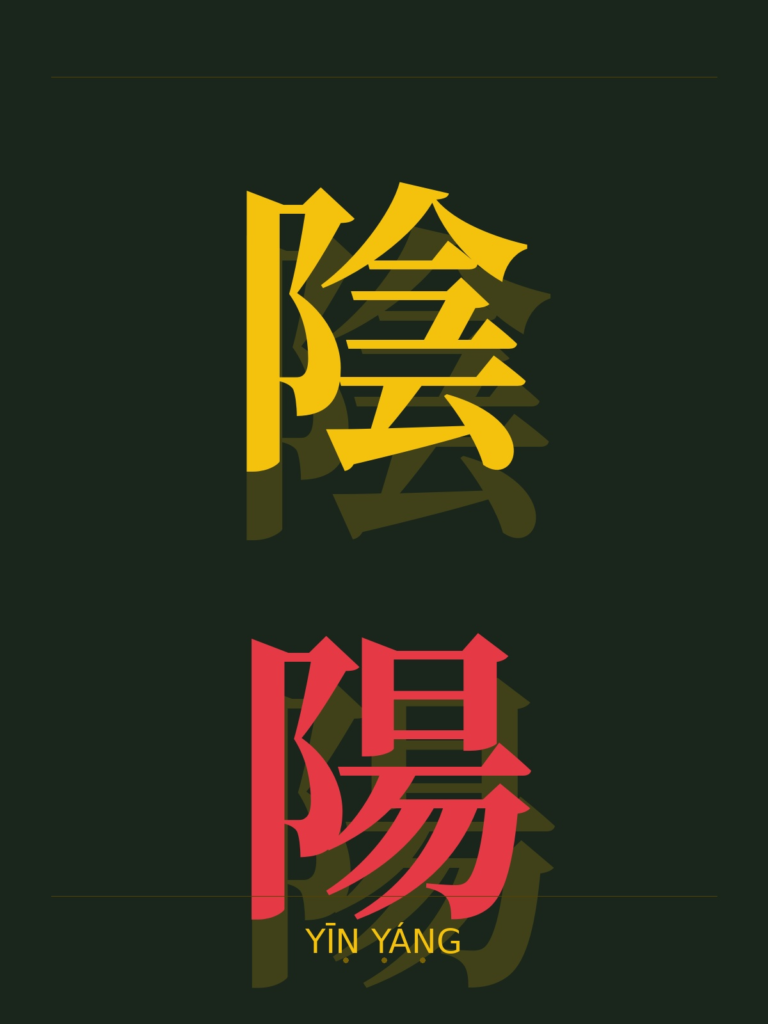
Yin and yang are not at war. They are partners in a continuous dance. They each containing a seed of the other, each giving rise to the other, the boundary between them always moving. Process flowing through nature, relationships, groups and individuals is not a static picture, but a living spiral. What appears on one level to be conflict is also two forces in perpetual, generative relationship. They are diverse energies learning who they are, how to co-exist and how to be changed by the other.
Process-Oriented Psychology often works with polarities. Whether that is an inner conflict a person is having, a body symptom, a relationship issue, a group process or a social issue in the world. Many conflicts are charicterized as a clash between different parts or energies. The primary process and the secondary process, the foundational model of Processwork, are yin and yang in psychological form. They encompass what we identify with and what we have not yet claimed. The presented self and the dreaming self is another polarity. As is ‘us’ and ‘them’ in a world issue, ‘me’ and ‘the symptom’ at the level of the body, or ‘me’ and ‘the disturbing part of the other’ in a relationship conflict. The work is never about eliminating one in favor of the other. It is about bringing enough awareness to the relationship between them that both can express their message and that the whole system can become more fully itself through their integration.
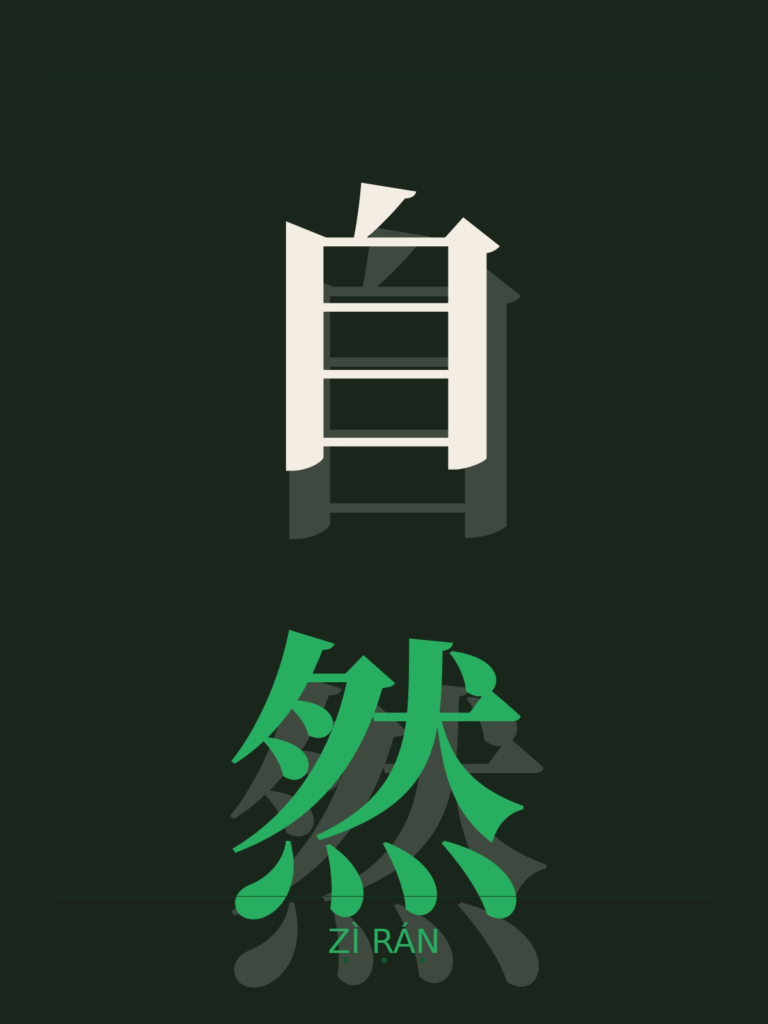
Zi ran, often translated as “nature” or “naturalness,” literally means “self-so.” It is that which arises by itself without forcing. It is the Taoist description of how things unfold when left to their own inherent intelligence. A seed becomes a tree. Water finds the sea. The body heals. These are not achievements of will. They are expressions of nature’s own direction.
Every signal, every symptom, spontaneous movement, dream image or disturbing mood, is something arising by itself, from the depths of the person’s own nature. The process-oriented approach treats these not as problems to be corrected but as expressions of zi ran: what the deeper self is doing on its own terms, independent of what the conscious mind prefers. The practitioner’s job is not to interfere with this, but to get to know it and support it to unfold, from a tiny bud of a signal into a fully expressed aspect of what is and wants to organically occur.
“Within what we call problems are paths we haven’t explored yet. The momentary awareness of signals and feelings, images and motions, shows the way.”
Arnold Mindell,
Earth-Based Psychology
Taoism’s deep attentiveness to the natural world places it in profound resonance with the earth-based traditions of Indigenous peoples. These are traditions that have held, across thousands of generations and in every corner of the earth, an understanding that Western modernity is only beginning to recover: that the natural world is not a resource to be extracted, but a living system of intelligence to which human beings belong and from which they can learn.
Indigenous ways of knowing are relational and place-based. Wisdom is not held in texts or accumulated in individual minds. It is carried in the land, in the relationships between species, in the ceremonies that maintain the community’s right relationship with the whole of life. What these traditions know about healing, about conflict, about the relationship between individual wellbeing and collective health, has been refined across a span of time that makes the entire history of Western psychology look like an afternoon.

These are the living roots that continue to shape how the work is practiced, taught and experienced.
The most fundamental instruction in Processwork is to follow the process. This is wu-wei translated into clinical practice. The practitioner does not lead the client toward a predetermined insight or outcome. They notice what is already moving and help it complete itself. This requires the same quality of surrender and precision that Taoism describes as the sage’s art.
Processwork’s concept of the edge is the moment something counter to the everyday identity tries to enter awareness and something comes up to block it. The edge can look like nervous laughter, shame, shaking, going blank, strong inner critics, loud belief systems and more. Much of Processwork training is learning to recognize edge behavior and open to the mystery of what is trying to emerge. It is the precise place where the Taoist instruction to follow nature becomes hard, because the nature trying to be followed is exactly what the conscious mind most wants to avoid. Working gently and with awareness at the edge is the daily practice of Processwork and Taoist principle.
Arnold Mindell’s concept of deep democracy is the spiritual practice and values system that every voice in a system must be heard, including the most disturbing and marginalized ones, for true, sustainable change to take place. This is one expression of the Taoist principle of complementary opposites applied to social and political life. Just as yin cannot exist without yang, a community cannot be whole while any part of its experience goes unrepresented. The most troubling voice in the room is often the one the system most needs to hear.
One of the metaskills that Amy Mindell identified as foundational to Processwork is the quality of beginner’s mind. This is an attitude of genuine curiosity with non-attachment to outcome and a deep respect for whatever arises. These are not exactly therapeutic techniques. They are Taoist and earth-based virtues translated into the language of practice. They describe not what a practitioner does, but the quality of attention that they bring to their work and the way that this influences the field and supports the Tao to show itself.
In his later work, Arnold Mindell developed earth-based psychology as a direct extension of these roots. This aspect of Processwork explores what it means to treat the natural world not as backdrop, but as participant. The earth that holds us is a dreaming presence that sends its own signals, holds its own wisdom and asks to be brought into relationship with our psychological and collective life. This is the oldest understanding of the earth-based traditions brought into contact with the most contemporary questions of how human beings can live and work well together with each other and the planet.


Just as the earth is moved by the universe, you, me, every human, every life form, and every thing is moved by the universe as well.
Awakening Soul Consciousness
by Aminah Raheem
How the universe solves personal and world problems
by Arnold Mindell
Transforming Health, Relationships, and the Community. Essential Practices to Confront Fears and Catalyze Change
by Arnold Mindell

Path Awareness from the Teachings of Don Juan, Richard Feynman, and Lao Tse
by Arnold Mindell

Arnold Mindell’s understanding and passion for nature and the awesome beauty of process
by Amy Mindell
THE DREAMING SOURCE OF CREATIVITY
30 creative and magical ways to work on yourself
by Amy Mindell
We offer workshops, classes, and longer training programs throughout the year, in person and online. Whether you’re new to this work or looking to deepen your practice, there’s likely something in the upcoming calendar for you.