What if your body symptoms were not just a source of suffering, but also a doorway into the creative foundations of everyday reality?
Dreambody work explores the meaningful connection between people’s dreams and their body experiences
Unfolding sensory-grounded, subjective experience of dreams and body symptoms using experiential, imaginative and somatic techniques to reveal the body’s own wisdom.
Arnold Mindell, the founder of Processwork, developed the concept of the dreambody when he realized that the energy behind his client’s body symptoms where also reflected in their night time dreams. From this, he deduced that the body is also ‘dreaming’ and that there is a deeper, energetic layer to our life experiences.
The Concept
What is the Dreambody?
The dreambody is not a physical object. It is not a second body sitting inside the one you can see. It is more like a field, a pattern of meaning and tendency that expresses itself simultaneously through your nighttime dreams, your body symptoms, your spontaneous movements, your relationships and the small involuntary signals you send out all day long without noticing them.
In physics, the dreambody has been compared to the quantum wave function: something that cannot be seen directly in consensus reality, but which expresses itself as tendencies to move in certain ways, to exist in certain patterns and to push toward certain experiences.
“The solution to a problem is often contained in the problem itself. Discovering the process, amplifying its channel, and a symptom can turn into a medicine.”
Arnold Mindell
The Dreambody is
Always present Always communicating
One of the most radical implications of this idea is that you don’t stop dreaming when you wake up. The same process that produces images in sleep continues throughout the day. It might show up as a vision, an internal voice, a body sensation, an involuntary gesture, a relationship pattern, or an event in the world that seems to mirror your larger process. Process-oriented psychology calls these different channels through which the dreaming process flows.
Your process is happening all the time. It is organizing your experiences. And maybe a larger process is organizing yours. Even if you don’t remember your nighttime dreams, you haven’t lost access to what they carry. That material is happening somewhere else. Often we can see signals of it in the body, in the symptom that won’t go away or in the movement your hand makes when you’re not paying attention.
a defining case
Symptoms as Teachers
Symptoms and illness can be horrendous experinces. They are never “your fault.” At the same time, they can be explored to discover meaning about the deeper process.
One of Mindell's earliest clients was a man dying of stomach cancer. When asked to describe his experience of the tumor, not the diagnosis, but the felt sense of it, the man said it felt like a big ball in his stomach, pushing outward.
Mindell encouraged him to amplify it.
"If you really followed that feeling, what would happen?"
The man said: "I would explode."
He did. Verbally, emotionally, he let something burst that he'd been holding for years. Afterward, he recalled a dream he'd had of fireworks. He determined that an "independence day" explosion would be his medicine.
The body experience and the dream were saying the same thing. A quiet, introverted man needed to be allowed to explode. His body was trying to make it happen.
From this and hundreds of similar encounters, Mindell named the phenomenon: the dreambody, the dreaming field happening in the body.
"The dreambody is your personal, individual experience of the Tao that cannot be said in consensual terms, while dreams and body experiences are like the Tao that can be said."
Arnold Mindell
Founder of Processwork
Context and lineage
Where This Work Comes From
Process-oriented psychology draws from multiple traditions. From Jungian psychology, it inherits the idea of a purposeful unconscious, the individuation process, and the technique of amplification. From Taoism, it takes the concept of following the river rather than redirecting it. Attending to what is, rather than imposing what should be. From physics, particularly quantum mechanics, it draws metaphors for non-local, wave-like processes that collapse into observable events. From shamanism and indigenous traditions, it recognizes the ancient understanding that illness and spiritual process are not separate.
The dreambody concept has been recognized within body psychotherapy and somatic psychology, transpersonal psychology and conflict resolution. It has been applied in work with individuals, couples, groups, large organizations and wherever secondary processes are marginalized and need to be followed toward meaning.
“Dreams are maps of the beginning of an otherwise uncharted trip into the unknown”
Every dream refers to, or “mirrors”, a particular body experience. And every body experience can be visualized and usually appears in dreams. So, to work on the body, you can work on dreams. And to work on dreams, you can follow body experiences.
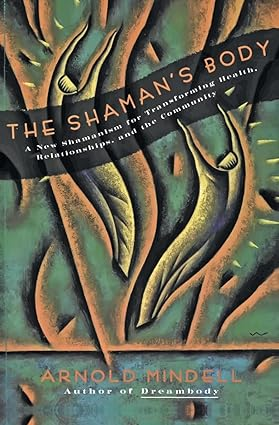
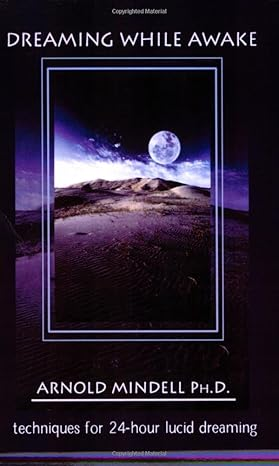
Psychotherapist Arnold Mindell goes deeper than ever before in his exploration of dreamwork as a tool for heightened perception and self improvement. by Arnold Mindell
A pioneering method of using crisis as a dynamic opportunity for accessing our inner world, confronting our fears, and catalyzing self-discovery. by Arnold Mindell
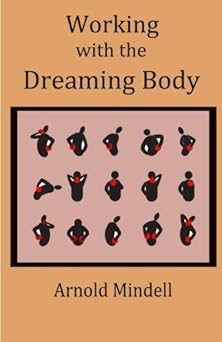
Drawing on a large number of case studies, practical applications of the Dreambody theory are described, instructing how to unfold symptoms and other somatic phenomena to reveal the dreamlike and mythical experiences that we usually discount in everyday life. by Arnold Mindell
17 women's journeys of overcoming body shame, sexism, and trauma. Through therapeutic sessions with David Bedrick, these women confront their deepest hungers and discover the power within their bodies' rebellion against a society that fetishizes thinness. by David Bedrick
Between the participants in any relationship, there exists a kind of enescapable communion whereby they create—dream up—parts of one another's worlds of experience out of each other's dreams. Rather than viewing this as a liability, it is a powerful learning tool. by Joe Goodbread
Alternative approaches to conventional medicine that falsely rely on fixed and binary definitions of health and sickness, inviting us instead to become explorers, which requires negotiating our personal and cultural expectations and conventions while remaining receptive to the processes of our experiences. by Pierre Morin
Ready to go deeper?
Explore our current courses and online community
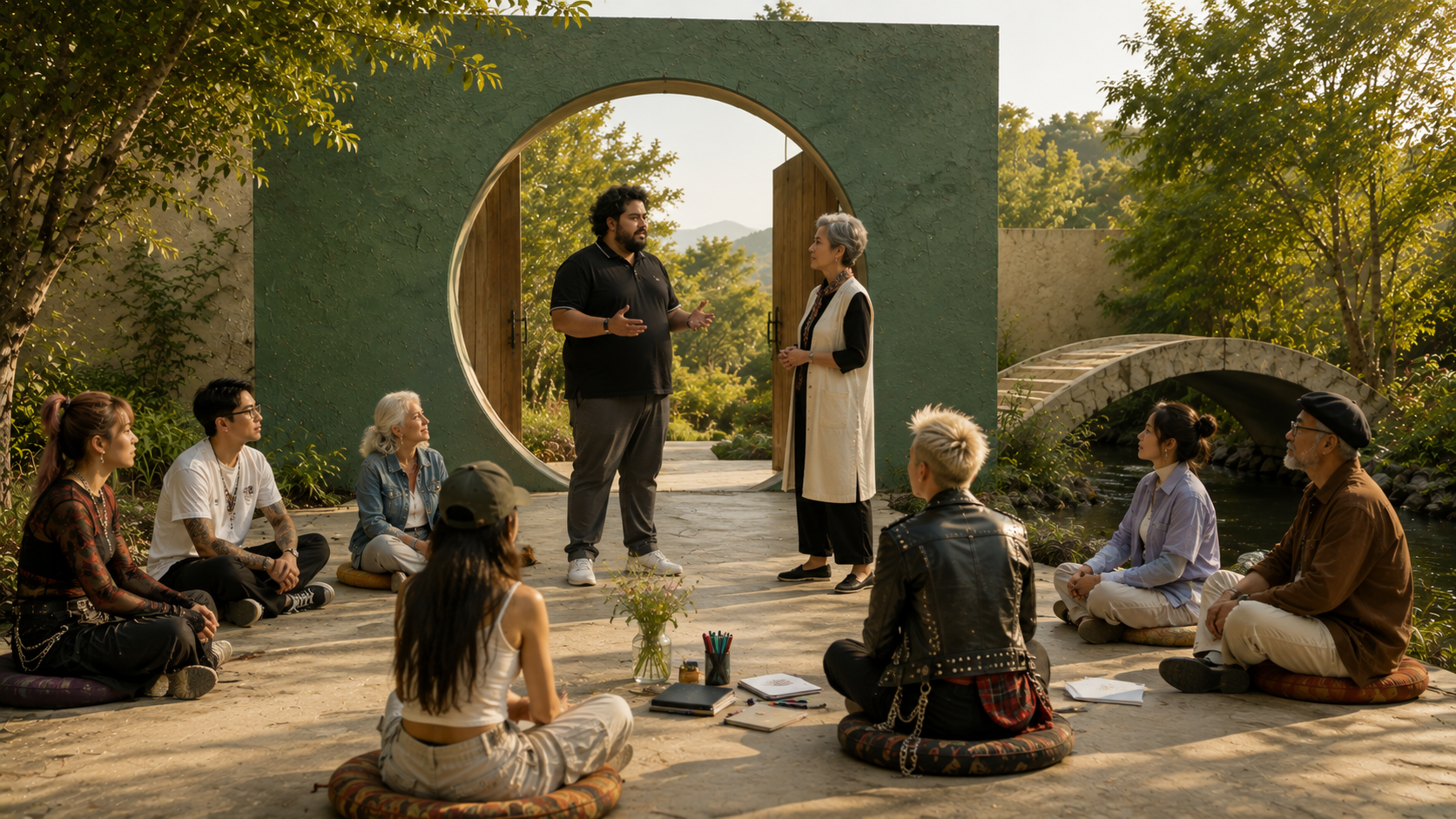
We offer workshops, classes, and longer training programs throughout the year, in person and online. Whether you’re new to this work or looking to deepen your practice, there’s likely something in the upcoming calendar for you.
Processwork offers a range of tools and techniques for working with this inner and outer process. It is a flexible modality with frameworks for understanding what is actually going on and tools for how to facilitate it.