Relationships

Have you ever wished for more intimacy, more freedom, or just better skills for negotiating conflicts in relationship?

Everywhere we turn are relationships: families, partners, colleagues, teammates, neighbours. At some points they might seem impossible, frought with challenging conflict. At other times, they are ecstatic, bringing us into experiences we deeply long for. Every one of them, and the full spectrum of experience that comes with them has something to teach us. 

The Approach

The Relationship Is a Living System

Processwork provides a multi-levelled framework and tools for facilitating your own and others’ relationships. By becoming more aware of our unconscious signals in relationships, we can tap into the deeper process attempting to emerge. The premise of process-oriented relationship work is that the disturbances in a relationship have valuable meaning that can be explored and unfolded to find deeper truth.

Just as Processwork holds that an individual’s body symptoms and nighttime dreams express the same underlying process, it extends this idea outward: the relationship itself is a kind of dreaming system. It has a primary process, the story the people tell about who they are, and a secondary process: everything that doesn’t fit that story. Usually the secondary process holds the information the system needs to overcome difficulties and to receive the richness of the positive aspects of the connection.

When two people come together, there is a dreaming field organizing their interactions. Processwork calls this the mythic bond: the deeper, often wordless story that first connected two people and that continues to call out to them even when daily life has buried it under schedules, resentments and exhaustion.

“Harmony is a wonderful thing,
but not nearly as powerful as awareness.”


Arnold Mindell

"If you can feel into both sides and articulate them, growing together happens. The solution to war is not peace but growing together."
Arnold Mindell
Founder of Processwork
Leaning in

Conflict has Intelligence

The most counterintuitive move in process-oriented relationship work is toward conflict, not away from it, with genuine curiosity about what the conflict is carrying.

This doesn’t mean every argument is meaningful in the way it presents itself. The recurring fight about dishes is rarely about dishes. But the energy in it, the particular heat of it, is usually pointing somewhere real. Following and facilitating that energy, rather than managing or mediating it away, can be a way the relationship grows and that each party can come to understand themselves and the other better.
Core Concepts

What Processwork Brings
to relationship work

An overview of some key Processwork theories

01

Double Signals

A big part of what causes conflict in relationships are double signals. Double signals are when one person is consciously, intentionally communicating one thing (such as with their word choce) while unconsciously, unintentionally communicating something contractions (such as with their tone, body language or actions). 

Processwork counter-intuitively believes in supporting the more unconscious communication to express itself. There can be a lot of inner and outer pressure contributing to keeping this signal unconscious. However, often in giving it the time and awareness to find its message and express itself, it holds the key about what is generating the conflict and the deeper truth about where the relationship wants to go. 

Read more about Double Signals.

02

High and Low Dreams

When we enter into relationships, we don’t come as a blank slate. We bring in both our High Dream, our greatest hopes, and our Low Dream, our worst fears. Often, we are not responding to what is happening alone, but we are responding to it as a signal which indicates whether our high or low dream is happening. Although the person in front of us changes, our high and low dreams tend to stay the same. Knowing the high and low dreams at play can help make sense of the projections and reactions occuring in the relationship. 

03

Rank and Power

In addition to our social understanding of power and priviledge, Processwork outlines five vectors of how power might be playing out in relationships. These include the contextual, psychological, moral and spiritual dimensions that show up in our rank relative to one another. 

Read more about Rank. 

“The tragedy of chronic conflict
lies not only in the unabating violence and hatred,
but in the repression of our need for oneness.”

Arnold Mindell

Rank and Power

We process social issues In our relationships

The larger social world doesn’t stay outside the door when two people come together. Issues of rank, power, culture, race, gender and more are structural forces that shape what each person has been taught to expect, to suppress or to feel entitled to. These are present in every relationship, often running beneath the surface as unexamined assumptions or inexplicable tensions.

Processwork brings awareness to these dynamics. Both to the way social conditioning and identity is shaping how two people interact and to how relationships are microcosms where we process world issues.

Videos About Process-Oriented Approaches to Relationships

On Codependency

Jan Dworkin on how Processwork understands codependency.

Differences in Parenting

Dawn Menken on navigating diversity in how two people want to parent. 

Dishonesty in Intimacy

Niyati Evers helps a woman who has been faking orgasms with her partner.

How to deal with anger in relationships

Jan Dworkin responds to a woman whose partner’s anger reminds her of her angry father.

How Processwork Works With Relationships

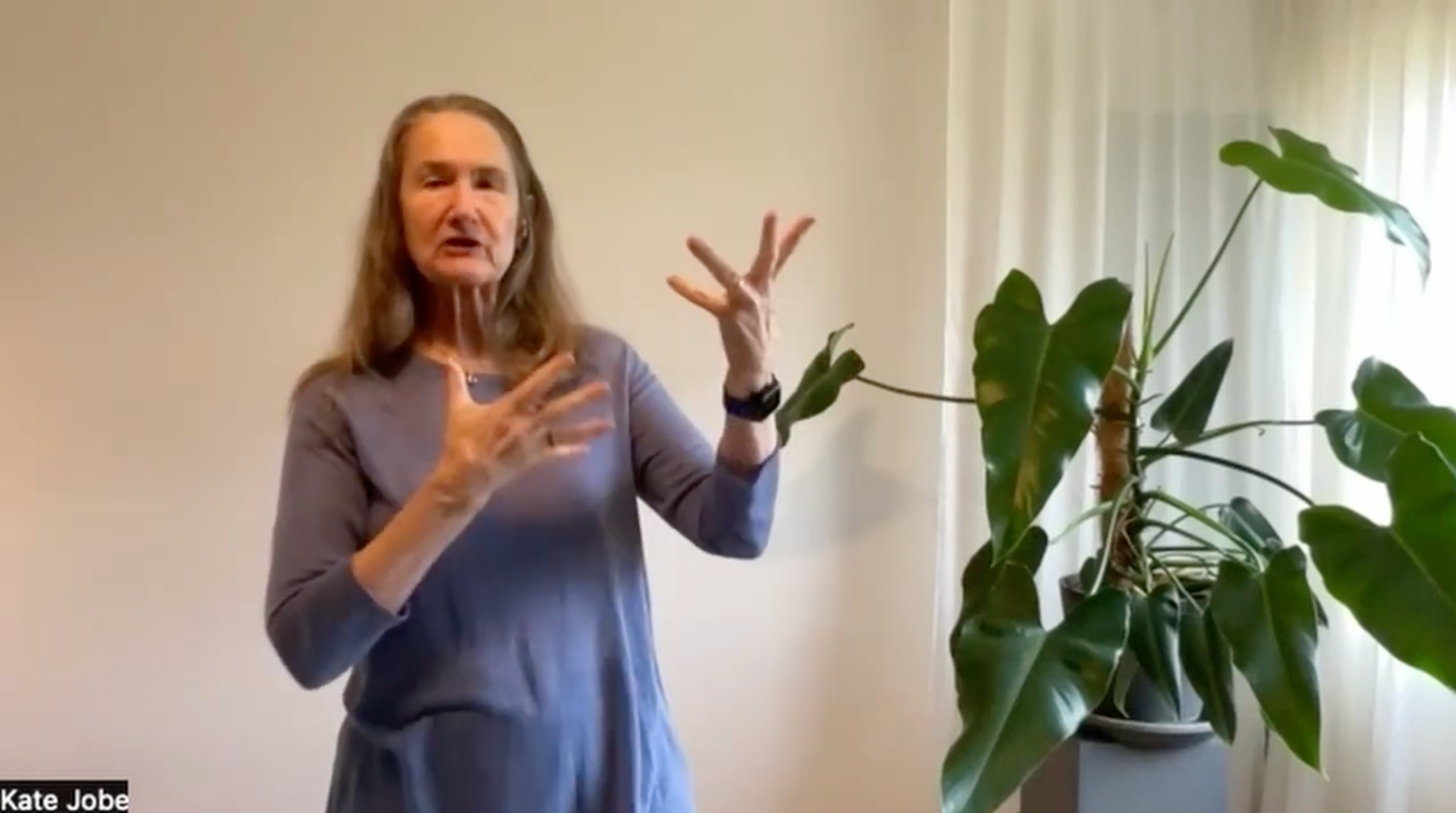
Kate Jobe outlines some of the process-oriented approach.

Navigating Diverse Political Views

Jan Dworkin counsels on what to do when our partner holds a different political views.

Even the most intractable relationship problems contain a great deal of meaning and wisdom, hidden within what otherwise might seem like intolerable events.

Amy and Arnold Mindell

Curious?

Books on Working with Relationships

The Dreambody in Relationships


Applies dreambody work to relationships, exploring how individual awareness impacts the couple.
by Arnold Mindell

Vital Loving: A Guide for Couples and Families


A guide focused on strengthening relationships
by Gary Reiss

Speak Out: Talking about Love, Sex and Eternity


Focuses on diversity issues and relationships.
by Dawn Menken

Make Love Better


Offers tools for managing conflict, power dynamics and communication styles.
by Jan Dworkin

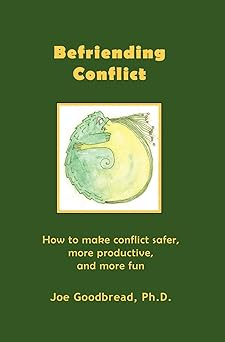
BEFRIENDING CONFLICT


How to make conflict safer, more productive, and more fun. How strong emotions and power, approached with curiosity and awareness, can enhance any conflict management method.
By Joe Goodbread

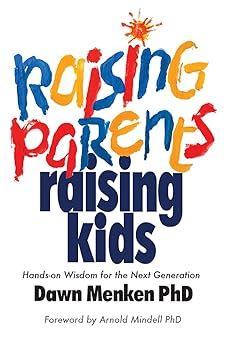
RAISING PARENTS, RAISING KIDS


This guide is for any parent, caretaker, or educator who wants to nurture children's emotional, spiritual, and social lives. We can create more meaningful relationships with children by supporting their deepest natures.
By Dawn Menken

LOVE, POWER AND WISDOM


How to have more love for ourselves, our relationships, the Earth, and our world. Full of stories that help illustrate this wisdom based path of love, and exercises that help us learn how to love fully with our minds, bodies and spirits.
By Gary Reiss

FAMILIES THAT DREAM TOGETHER


Solutions for today’s most pressing family problems, showing how families are together trying to find answers for society’s biggest challenges through new methods of inner work and meditation, relationship work, communication, and community based healing.
By Gary Reiss

CAN I BE HONEST WITH YOU?


More than a collection of (hilariously) entertaining dating stories. It is a poignant inner ride through one woman’s sharp mind and deep heart, a mythic journey of love, authenticity, and personal empowerment.
By Amy Palatnik

THE DANCE OF SEX


A Dreambody Approach to Love, Sex, and Ecstasy, addresses the need for a new sexual revolution based on awareness, connection, ecstasy, and love, which integrates the best of sex therapy, relationship work, and spiritual approaches to sexuality including Tantra.
By Gary Reiss


Ready to go deeper?

Explore our current courses and online community

We offer workshops, classes, and longer training programs throughout the year, in person and online. Whether you’re new to this work or looking to deepen your practice, there’s likely something in the upcoming calendar for you.

Ready to go deeper?

More Applications of
Processwork

Processwork offers a range of tools and techniques for working with this inner and outer process. It is a flexible modality with frameworks for understanding what is actually going on and tools for how to facilitate it. 

Processwork is applied in a wide diversity of areas including innerwork, relationships, dreams and body symptoms, organizations and group work, conflict studies and states of consciousness.